No. 03 · Delhi & Awadh

Why Paneer Nihari exists at Rasodaya
On reinterpretation, and why we say so out loud.
Written by The Rasodaya kitchen
4 min read

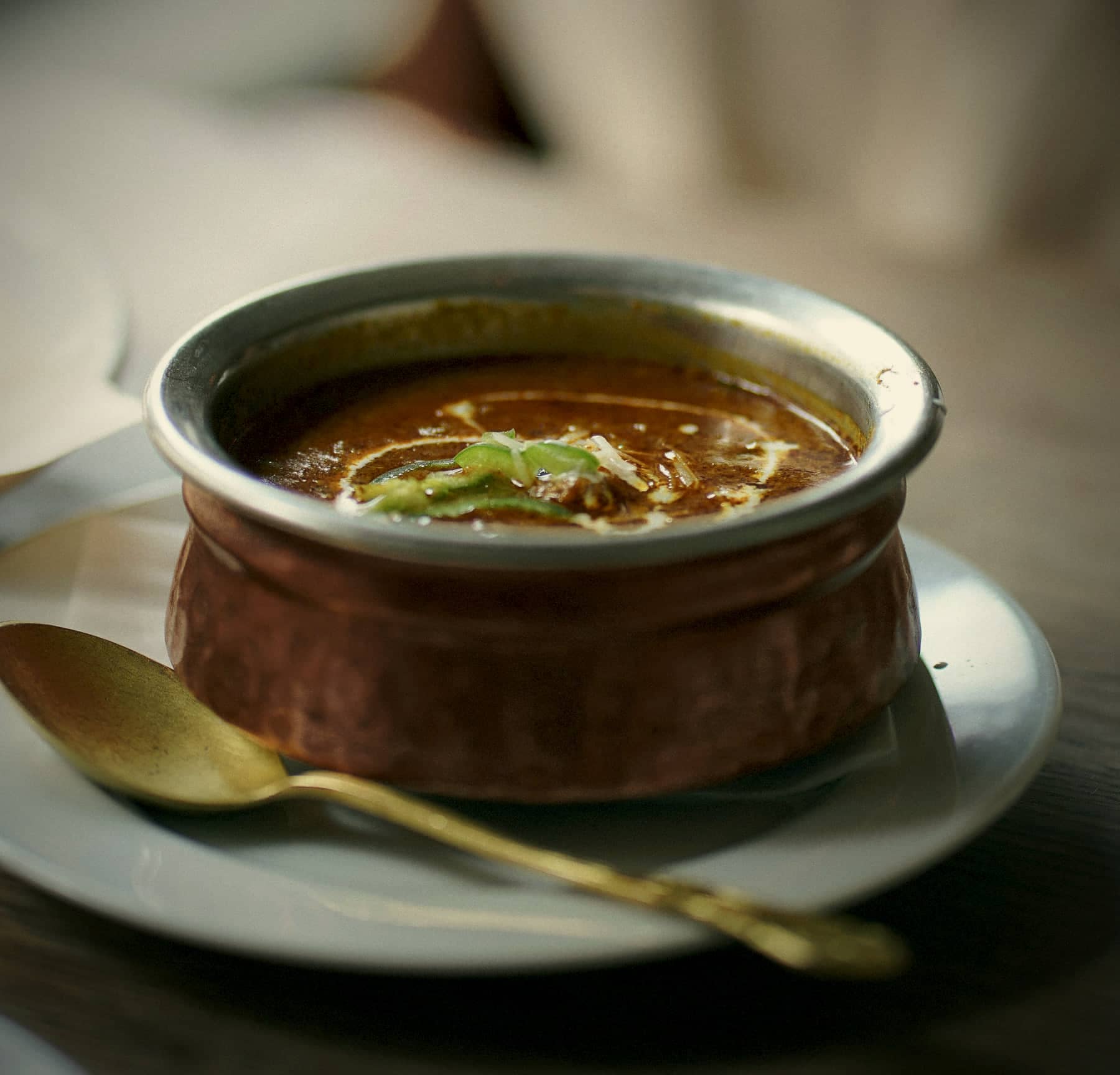
Nihari is a slow-cooked stew, traditionally made with meat and long associated with the older kitchens of Delhi and Lucknow. It is a dish of patience: long, low heat, deep spice, and a finish that is somehow both rich and bright.
Paneer Nihari is not a historic dish. We want to be clear about that from the first sentence, because the easiest thing a new food brand can do is borrow a story it did not earn.
So why make it?
Because the feeling of nihari deserved a place on a vegetarian table. The warmth that builds slowly. The colour, somewhere between mahogany and dusk. The sense that the dish has been waiting for you, rather than rushed to you.
We began by asking what actually makes nihari feel like nihari, and what could be rebuilt without losing it. Some things turned out to be essential. Others turned out to be habit.
What we kept, and what we changed
- We kept the patience. The gravy is built slowly, and it tastes like it.
- We kept the warmth: a spice profile that glows rather than burns.
- We kept a bright finish, so the richness never becomes heavy.
- We changed the centre of the dish. Paneer is gentler than meat, so everything around it had to be recalibrated to let it hold its own.
Respecting a dish does not mean pretending it cannot be reimagined. It means saying clearly when you have.
That is why the menu calls it what it is: Delhi and Awadh, reinterpreted. If you know the original well, we hope you recognise its spirit. If you have never tasted it, we hope this makes you curious enough to seek it out.
The Rasodaya kitchen
Sources and notes
Where this entry refers to history, these are the sources it draws on.
Continue reading